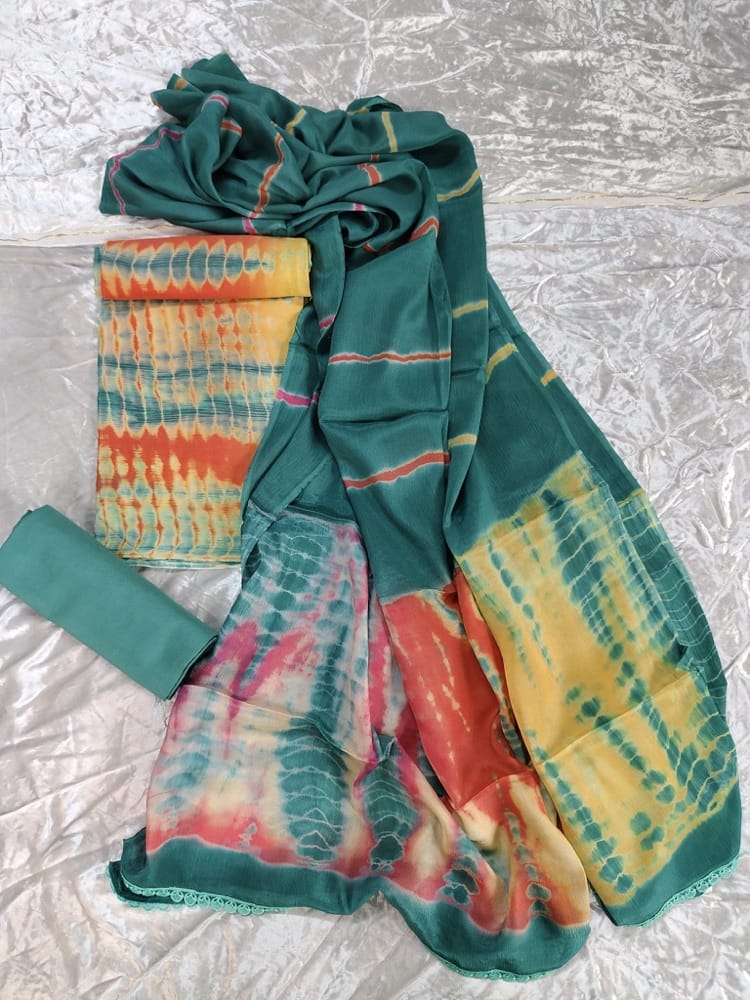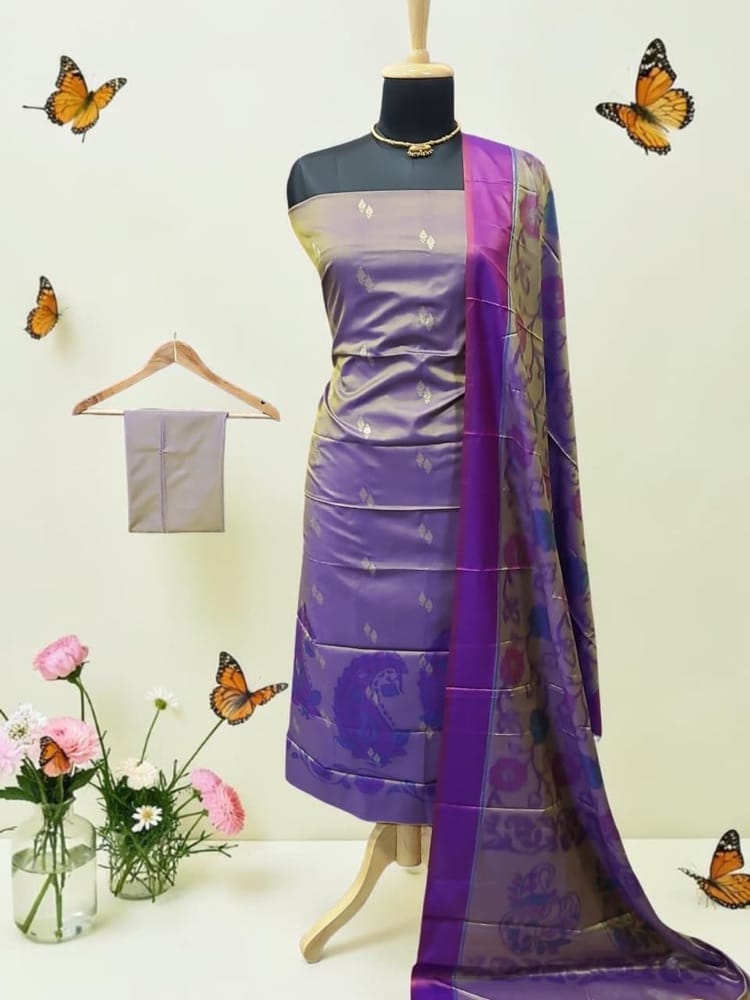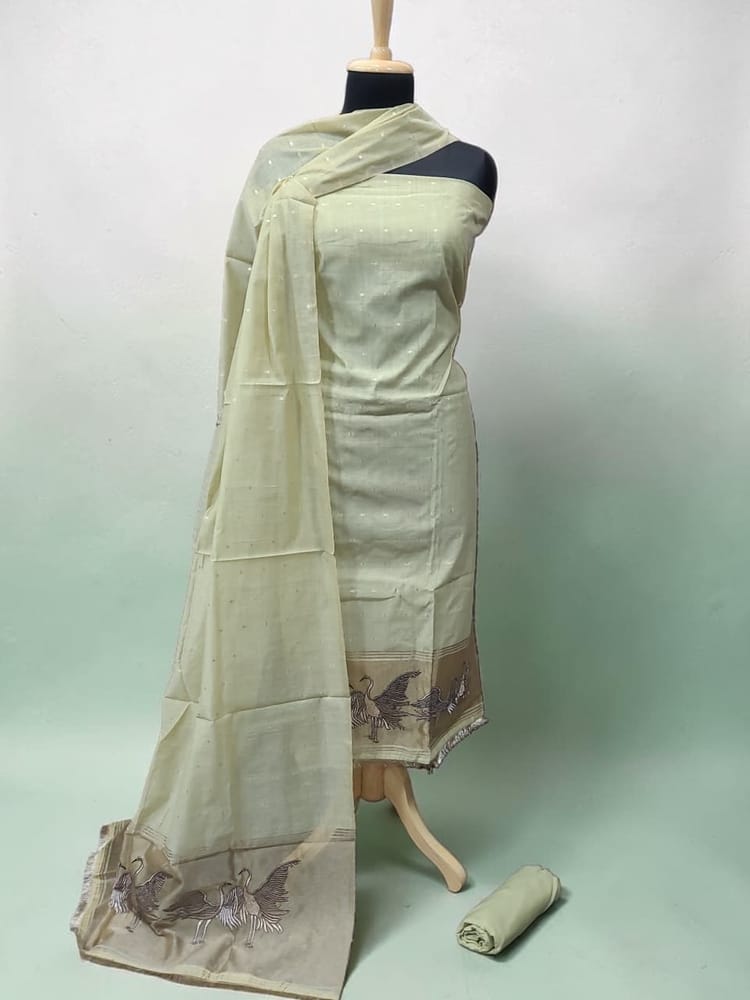
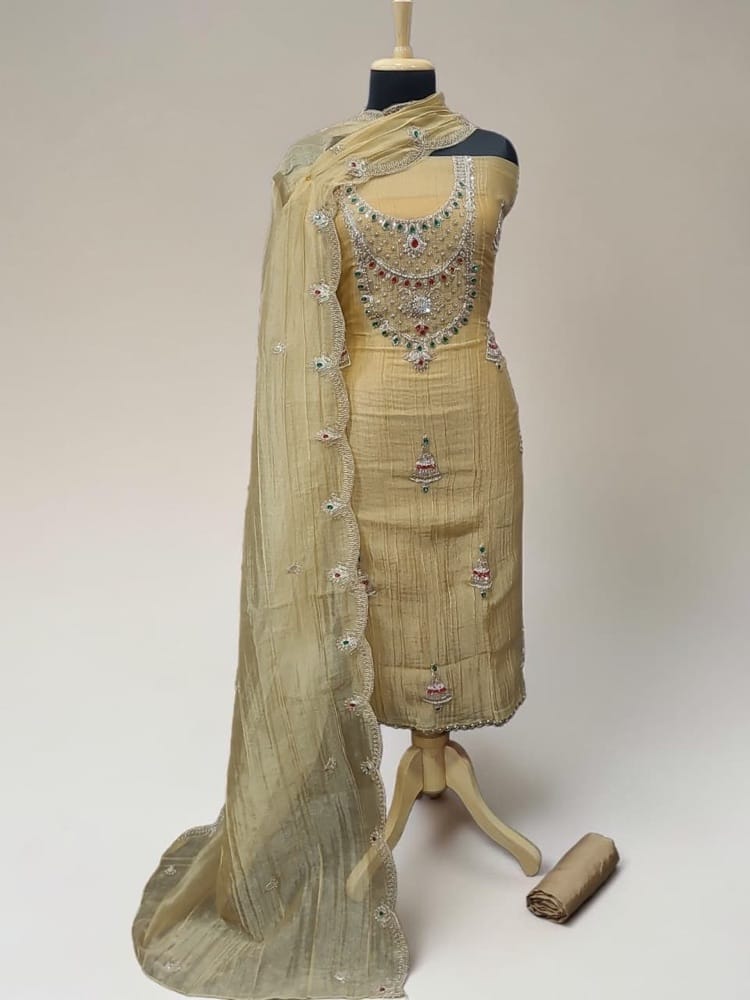
Indo-Western has become a label you can attach to almost anything: a kurta with a zip, a gown with a border, a dress in a Banarasi fabric. Used that loosely it tells a customer nothing about what she is buying.
It is worth separating the two things it is usually doing at once.
Indian fabric in a Western silhouette
This is the common version — a handwoven cloth cut into a shape that came from somewhere else. A wrap dress in a Chanderi. A blazer in a brocade.
It works when the fabric can take the construction. It fails when a cloth meant to drape is forced into a shape that needs it to hold, and the garment spends its life looking slightly tired.
Western proportion in an Indian silhouette
The less obvious version, and usually the more wearable one. The garment is still a kurta or a tunic, but the proportions have moved: a shorter length, a straighter line, a sleeve that stops where a shirt sleeve stops.
Nothing here is borrowed except the measurements. That is why it tends to sit better — the cloth is doing the job it was woven for.
Where we sit
Mostly the second. We start from Indian silhouettes and move the proportions, because a fabric behaves the way it behaves and arguing with it is a losing position.
The useful question is not whether something is Indo-Western. It is whether the fabric and the shape were chosen for each other, or whether one was imposed on the other.